Flood-Aware Storage in Brisbane: Why Elevated Containers Matter
Published
Wondering how near we are? Our storage near me page maps drive times to Storage Land from 40+ Brisbane suburbs.
Anyone who lived through the 2011 or 2022 floods knows Brisbane's relationship with water is complicated. When the rivers and creeks come up, the things people lose aren't just furniture - they're photo albums, business records, tools, and the contents of a lifetime. So if you're putting belongings into storage in Brisbane, "where will my stuff be when the next big wet hits?" is a fair question to ask before you sign anything.
This guide explains what actually makes a storage facility flood-aware, why an elevated shipping container on a sealed yard behaves very differently to a ground-level unit in a low-lying shed, and the questions worth asking any Brisbane operator before you hand over your goods.
Why flood risk is a real storage question in Brisbane
Brisbane sits across a flood plain. Large parts of the southside and the suburbs along Oxley Creek and the Brisbane River have a documented history of inundation, and wetter La Nina years push the risk up further. Most household contents insurance either excludes flood or charges a heavy premium for it, and stored goods are frequently not covered at all unless you arrange a specific policy.
That means the physical setup of where you store matters more than most people assume. Two facilities at the same address can offer very different outcomes in a flood depending on whether your goods sit on the ground or above it, and whether the surface beneath drains or holds water.
What makes storage "flood-safe"? Four things to check
No storage in a flood plain is ever "flood-proof" - that word should make you suspicious of anyone who uses it. What you actually want is storage that reduces flood exposure as far as practically possible. Four features do most of the work:
- Elevation off the ground. Even 100-150mm of clearance keeps your floor above minor surface water, sheet flow, and pooling after heavy rain - the most common way stored goods get wet in Brisbane, well before any river peak.
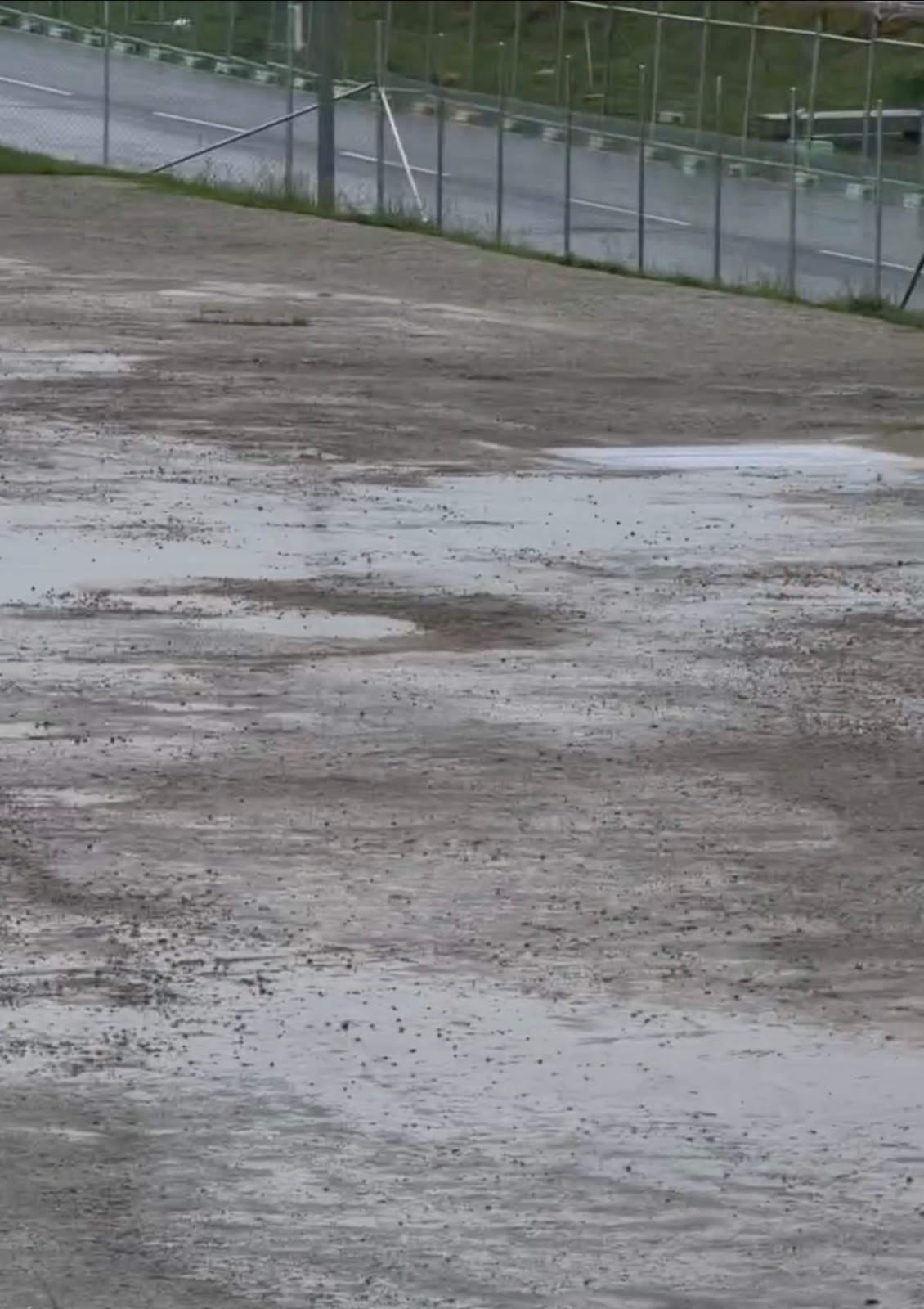
- A sealed, draining surface. A sealed bitumen yard sheds water to drainage points. A dirt or crusher-dust yard turns to mud, holds water against whatever sits on it, and wicks moisture upward.
- A weatherproof, sealed container. A shipping container is built to cross oceans on a ship's deck. The steel body and rubber door seals keep driving rain and splash out in a way a roller door on a timber-framed shed simply can't match.
- Site drainage and grading. Look at where the water goes during a downpour. A well-graded site directs runoff away from where goods are stored rather than letting it collect.
How Storage Land is set up for Brisbane weather
At Storage Land in Archerfield, every storage container sits elevated on timber blocks rather than directly on the ground. That clearance is deliberate - it keeps the container floor above surface water and pooling, lets air circulate underneath, and keeps pests and ground moisture away from your belongings.
The containers sit on a fully sealed bitumen yard, not crusher dust or dirt. Sealed bitumen sheds water to the site's drainage instead of turning to mud and holding water against your container. We've written a full comparison of sealed bitumen versus crusher dust hardstand if you want the detail on why the surface under your goods matters.
On top of that, the goods themselves go inside a sealed, weatherproof 20ft shipping container - heavy-gauge steel with rubber door seals, designed to keep weather out. You can see the yard, the elevated containers, and the sealed surface on our facility page.
None of this makes any storage immune to a catastrophic flood event - nothing in a flood plain is. But elevation plus a sealed draining surface plus a weatherproof steel box is a meaningfully better setup than belongings stacked on the floor of a ground-level unit.
Heat, humidity and condensation - the other Brisbane wet-season problem
Flooding is the dramatic risk, but the quieter one is humidity. Brisbane summers are humid, and a sealed container can build condensation if it isn't ventilated. The fix is airflow, not sealing things tighter. Our containers are ventilated to let moist air move through, and elevation helps air circulate underneath too.
If you're storing anything fabric, timber, electronic, or paper-based over a Brisbane summer, it's worth reading our guide on how to prevent mould in container storage - a few cheap habits (pallets, moisture absorbers, leaving a gap to the walls) make a big difference.
What to ask any Brisbane storage facility about flooding
Before you store anywhere, ask:
- Is the storage area elevated off the ground, and by how much?
- Is the surface sealed and drained, or is it dirt or gravel that holds water?
- What's the flood history of this specific address?
- Are my goods inside a weatherproof, sealed structure?
- What does my agreement say about liability and insurance if water gets in?
- Can I arrange my own contents insurance for stored goods?
A good operator will answer all of these plainly. If anyone tells you their site "can't flood," treat that as a red flag rather than reassurance.
Flood and Storage FAQs
Is Storage Land in a flood-free area?
No facility anywhere in the Brisbane flood plain can honestly claim to be flood-free, and we won't. What we can say is that our containers sit elevated on timber blocks above a fully sealed bitumen yard, inside weatherproof steel containers - a setup designed to reduce flood and water exposure as far as is practical for Brisbane conditions. 675 Beaufighter Ave is outside Council's mapped extents for both the January 2011 and February 2022 floods. It is inside the mapped 1974 extent and sits in Brisbane River flood planning area 5. You can check all of that on Council's own maps.
Why are the containers raised on timber blocks?
Elevation keeps the container floor above surface water and pooling after heavy rain, allows air to circulate underneath to reduce moisture, and keeps pests and ground damp away from your belongings.
Does a sealed bitumen yard really matter?
Yes. Sealed bitumen sheds water to drainage rather than holding it. A dirt or crusher-dust yard turns to mud, pools water against your container, and wicks moisture upward into your goods.
Is my stuff insured against flood while in storage?
Stored goods are generally not automatically insured against flood. We recommend arranging your own contents insurance for items in storage and reading your storage agreement carefully so you know exactly where you stand. For the full picture, see our guide to storage insurance in Brisbane.
What should I store off the floor inside my container?
Anything valuable or moisture-sensitive is best kept on pallets or shelving rather than directly on the floor, with a small gap to the walls for airflow. This protects against both condensation and any water ingress.
Helpful Storage Guides
Related guides that may help:
- Sealed Bitumen vs Crusher Dust - why the surface under your goods matters in the wet.
- How to Prevent Mould in Container Storage - keep a humid-season store dry.
- Is Container Storage Safe in Summer? - heat and humidity in Brisbane.
- Business Document & Archive Storage - keeping records dry and secure off-site.
Flood-Aware Storage in Archerfield
Sealed, weatherproof 20ft containers, elevated on timber blocks above a fully sealed bitumen yard. 20ft container from $349/mo. Vehicle bay from $275/mo. 24/7 access, no lock-in contracts.
ABN: 47 671 581 534